Off to Praise the Lord Goose PNG
A Design That Smiles Before It Stitches
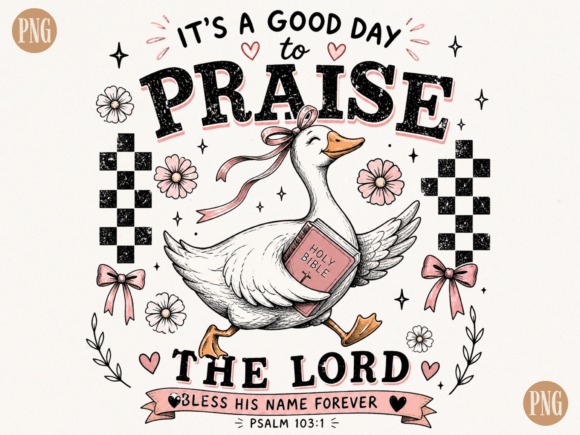
The first time I opened Off to Praise the Lord Goose PNG, I didn’t reach for my embroidery machine—I paused. There’s a gentle, unhurried joy in this design: a round-cheeked goose mid-stride, wings slightly lifted, beak open like it’s singing—not honking—along with something sacred and sweet. The composition is friendly but not cutesy, reverent but never stiff. It’s clearly built for T-Shirt Designs, yet its charm extends far beyond cotton tees. I immediately pictured it on a linen tea towel for a church bazaar, stitched onto a soft organic-cotton baby onesie, or centered on a heavyweight canvas tote for a women’s Bible study group.
Where This Goose Really Takes Flight
In real project use, Off to Praise the Lord Goose PNG shines brightest on medium-to-heavyweight fabrics where stitch definition holds: think sweatshirt embroidery on fleece-lined hoodies, embroidered patch applications on denim aprons, or pillow covers made from sturdy cotton duck. I tested a mockup on a charcoal grey unisex crewneck—and the design landed with warmth and clarity. The curves of the goose’s neck and wing flow naturally under satin stitch, and the subtle contouring in the face reads beautifully at 3.5–4 inches wide. It also works thoughtfully on holiday embroidery: imagine it stitched in ivory thread on a sage green kitchen towel as a Christmas hostess gift, or scaled down (with careful digitizing review) for a baptismal blanket corner.
For Etsy sellers and small shop owners, this design bridges niche and broad appeal. It’s faith-rooted without being overly doctrinal—making it safe for secular craft fairs when styled right—and it avoids cliché through personality. Customers don’t just buy a “Christian design”; they buy a moment of lightness, sincerity, and quiet devotion. That translates directly to handmade product value and buyer engagement—especially for personalized gifts where emotional resonance matters more than trendiness.
Fabrics and Surfaces That Ask for Extra Care
Don’t rush this design onto thin jersey t-shirts or stretchy performance knits without testing. The goose’s rounded body and expressive eye rely on stable stitch registration—and high-stretch fabric can blur those soft edges. Likewise, dark fabric demands attention: check whether the original embroidery file includes underlay or sufficient density in light thread colors. If you’re planning black-on-black stitching, confirm that fine details (like the curve of the beak or eyelash line) won’t vanish in dense fill areas.
Curved surfaces—like structured caps or tapered baby hats—require thoughtful placement. The goose’s horizontal orientation means it needs a clean, flat expanse. On a curved cap front, it’ll read best centered above the bill, not wrapped around the crown. And avoid cramming it into tiny hoops (<3” diameter) unless you’ve verified that no critical detail—especially the spacing between the feet or the shape of the tail feathers—is compromised at reduced scale.
What This Design Says About Your Craft—and Your Customers
Using Off to Praise the Lord Goose PNG signals intentionality. It’s not background filler; it’s a focal point with narrative weight. When stitched cleanly on an apron for a church kitchen volunteer, it communicates care—not just decoration. When placed on a nursery decor item, it adds warmth without overwhelming the space. That kind of subtlety builds customer trust: buyers sense that the maker chose this design deliberately, not just because it was trending.
Visually, it balances simplicity and storytelling. There’s no excessive layering or overworked embellishment—just confident line work and intentional negative space. That makes it highly adaptable across branding: pair it with clean sans-serif typography for boutique merchandise, or soften it with watercolor-style printable mockups for digital product previews. For creative entrepreneurs selling digital embroidery files, this design stands out because it feels *designed*, not assembled.
Practical Designer Notes Before You Stitch
- Always test on scrap fabric first—especially if using textured weaves like waffle-knit towels or looped terry cloth.
- Review stitch density: high-density fill in the goose’s body helps prevent puckering on stable fabrics, but may need reduction on lightweight cotton.
- Check thread color contrast against your base fabric in both natural and artificial light—ivory thread on oatmeal linen looks serene; the same combo on off-white poly-cotton can read muddy.
- Use cutaway stabilizer for knits, tear-away for stable wovens, and consider topping for napped fabrics like fleece.
- Inspect small details at actual stitch-out size: does the eye hold shape? Do the feet land evenly? Does the beak read as open—not pinched?
- Test black-and-white mockups to verify readability if offering monochrome versions for minimalist buyers.
- Confirm licensing terms before listing finished products or reselling the digital embroidery file—commercial use rights aren’t automatic with every T-Shirt Designs download.
A Final Thought From the Hoop
I recently used Off to Praise the Lord Goose PNG on a set of three linen napkins for a friend’s ordination luncheon. The stitching held up beautifully after two machine washes—and guests kept commenting on how “happy” the goose looked, how it felt personal without being preachy. That’s the quiet strength of this design: it carries meaning without shouting, invites connection without demanding agreement, and stitches with grace across dozens of real-world uses—from baby embroidery to boutique branding, from holiday embroidery to everyday handmade product lines. It’s not just another digital embroidery file. It’s a small, steady note of joy—ready to land exactly where it’s needed.